Historical Importance and Rise in Popularity of Monument Valley
Monument Valley, or Tsé Bii ʼ Ndzisgaii (meaning “valley of the rocks”) in Navajo , is a stunning high-desert landscape on the Arizona-Utah border, famous for its towering sandstone buttes and mesas. These iconic red rock formations, like the West and East Mitten Buttes, were sculpted over tens of millions of years by wind and water erosion. It is not a national park, but the Monument Valley Navajo Tribal Park, managed by the Navajo Nation to protect its spectacular beauty and profound cultural significance. The valley has been a homeland for the Ancestral Puebloans and later the Navajo people , who consider it a sacred place in their creation stories. Visitors are encouraged to practice respectful tourism and hire Navajo guides to ensure conservation and honor the community's heritage.
TRAVEL AND ADVENTURE
avenoraaesthetics.com
5/8/20244 min read
Monument Valley’s Geology and Formation
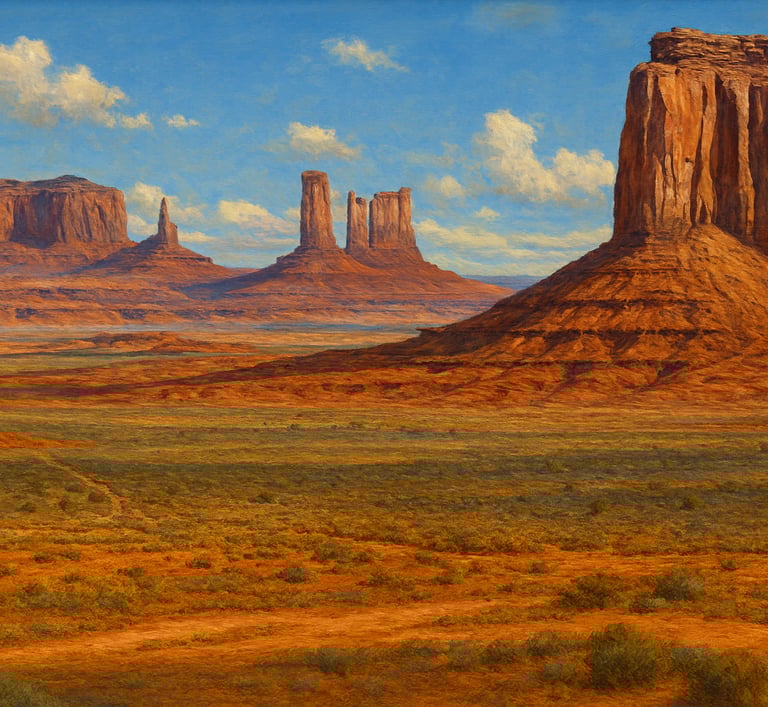
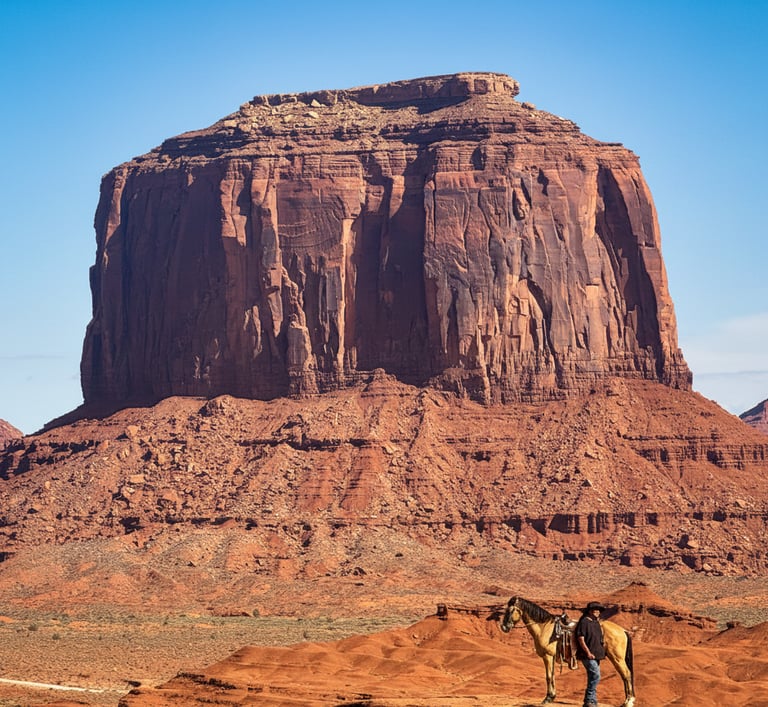
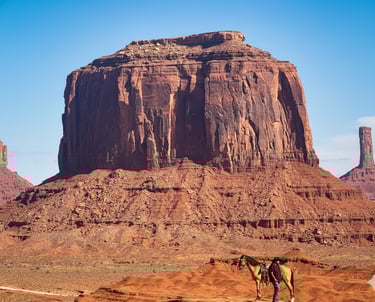
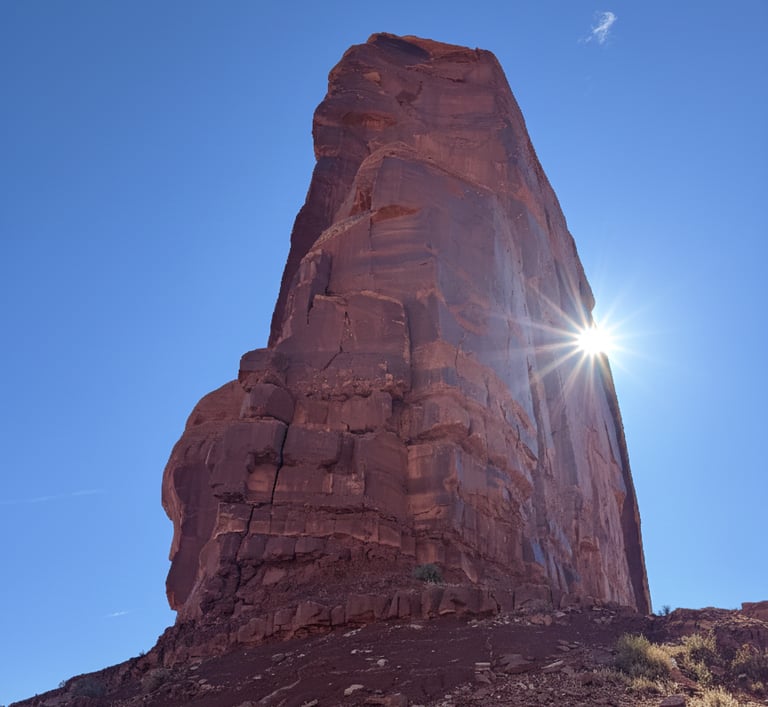
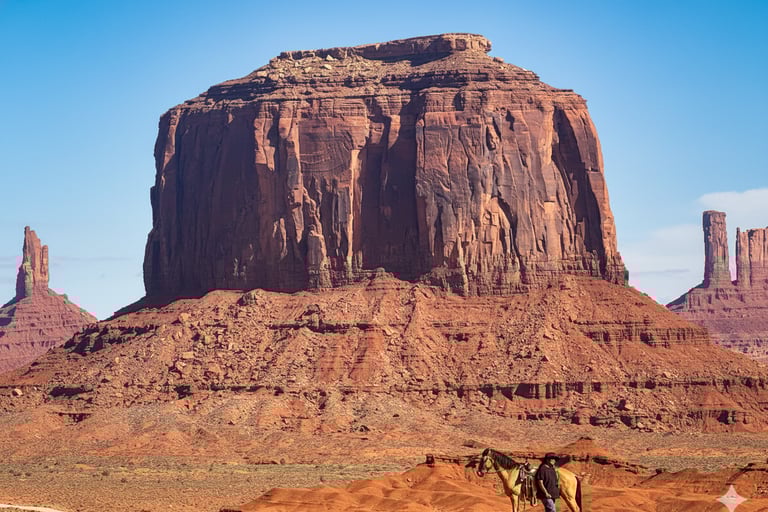
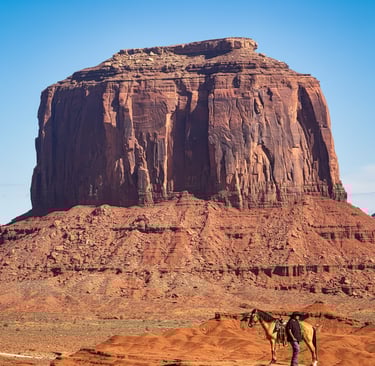
Monument Valley, known in Navajo as Tsé Biiʼ Ndzisgaii, meaning “valley of the rocks,” is celebrated for its breathtaking landscape, which features towering sandstone buttes, mesas, and spires. These remarkable geological structures ascend from the high desert at the border of Arizona and Utah, creating an iconic and instantly recognizable skyline. Notable formations, including the West and East Mitten Buttes, Merrick Butte, the Three Sisters, and the Totem Pole, are remnants of ancient plateaus that have been sculpted over tens of millions of years. This transformation has primarily resulted from wind and water erosion, which have shaped the land into its current form.
The buttes display distinct, stratified rock layers. The base consists of Organ Rock Shale, with de Chelly Sandstone forming the middle layers. At the top, the Moenkopi Formation is capped by the Shinarump Conglomerate. These layers were deposited by ancient rivers and later uplifted by geological forces. Over time, erosion removed much of the surrounding material, leaving behind the isolated monoliths that define Monument Valley’s landscape.
The valley’s striking red hues come from iron oxide in the siltstone, while blue-gray tones are a result of manganese oxide. The valley floor’s elevation ranges between 5,000 and 6,000 feet (1,500 to 1,800 meters) above sea level. This elevation contributes to Monument Valley’s unique climate, which features hot, dry summers moderated by altitude and cold, crisp winters. Occasionally, snow blankets the landscape, creating a dramatic visual contrast with the region’s iconic red rock formations.
Early Inhabitants and Archaeological Record
Before Monument Valley became a symbol of the American West, the region was home to the Ancestral Puebloans (also known as Anasazi), whose presence spanned from approximately 1200 BCE to 1300 CE. Archaeological findings, such as stone dwellings, petroglyphs, and pottery shards, reveal a sophisticated society engaged in agriculture, trade, and spiritual activities closely tied to the desert environment. The Ancestral Puebloans built pit houses, cliff dwellings, and ceremonial kivas, and their rock art is still visible in sheltered alcoves throughout the region.
After the Ancestral Puebloans departed—likely due to changes in climate and limited resources—the Navajo (Diné) people settled in the area between the 16th and 18th centuries. The Navajo have maintained a significant cultural presence, practicing agriculture, pastoralism, and spiritual traditions deeply connected to the valley’s distinctive landforms. Many geological features within Monument Valley hold important roles in Navajo creation stories and oral traditions, symbolizing concepts like protection, harmony, and the sacredness of the land.
Monument Valley as Navajo Tribal Park and Management
Today, Monument Valley falls within the boundaries of the Navajo Nation, the largest Indigenous territory in the United States. Rather than being a national park, it is managed as the Monument Valley Navajo Tribal Park by the Navajo Parks and Recreation Department. Established in 1958 as the first tribal park on American Indian reservation lands, the park covers nearly 92,000 acres and is dedicated to safeguarding both the spectacular landscape and its profound cultural meaning.
The park’s mission centers on preserving and managing tribal parks, monuments, and recreation areas for the lasting enjoyment and benefit of the Navajo Nation, ensuring that conservation and community well-being are closely linked. All park employees are Navajo, and management incorporates traditional knowledge as well as input from the community. Several Navajo families still live on the valley floor, some maintaining traditional ways of life such as herding and farming, often without modern amenities like running water or electricity.
Conservation and Land Stewardship
The Navajo Nation employs a comprehensive approach to conservation, blending traditional land management with contemporary environmental practices. This effort includes limiting overdevelopment, controlling resource extraction, and encouraging sustainable grazing and farming. Educational initiatives and guided tours led by Navajo cultural interpreters promote respect for the land and its heritage, while collaborations with conservation organizations support habitat restoration and environmental monitoring.
Sustainable tourism is a cornerstone of the park’s management. Regulations restrict visitor access to sensitive areas, and guided tours are required to enter backcountry locations such as Mystery Valley and Hunts Mesa. These measures help prevent erosion, protect archaeological sites, and ensure tourism enhances rather than harms the valley’s ecological and cultural integrity.
Cultural Significance to the Navajo Nation
For the Navajo people, Monument Valley is much more than a scenic destination—it is a living homeland imbued with spiritual significance. The valley is perceived as an enormous hogan (traditional dwelling), with specific formations representing elements of Navajo cosmology. For instance, the Mittens are seen as the hands of a deity, while the valley itself is a place of creation and protection.
Traditional ceremonies, stories, and practices continue to shape Navajo identity in the region. The land is used for grazing, farming, and gathering, and many formations are sacred. Visitors are asked to respect Navajo homes, avoid disturbing archaeological sites, and seek permission before photographing people or participating in cultural events.
Cultural Etiquette and Respectful Tourism
Visitors to Monument Valley are guests on Navajo land and are encouraged to observe cultural norms that honor the values of the community:
· Always ask before taking photos, especially of people, homes, or ceremonies.
· Stay on designated routes unless accompanied by a Navajo guide.
· Support local artists and businesses by purchasing authentic crafts directly from Navajo vendors.
· Do not disturb sacred sites or artifacts; leave everything as you find it.
· Dress modestly and appropriately, especially when visiting sacred or communal areas.
· Listen more than you speak and respect privacy in homes and communities.
By following these guidelines, visitors help preserve the valley’s cultural integrity and foster positive relationships with the Navajo people.


Pure herbal bliss